

Navigating ACA drug coverage can be tricky, and formularies play a huge role in determining your medication costs and access. Here’s what you need to know:
- Formulary Basics: A formulary is a list of drugs your ACA health plan covers. If a drug isn’t listed, you’ll likely pay full price.
- Cost Tiers: Medications are placed in tiers, from Tier 1 (low-cost generics) to Tier 4 or 5 (high-cost specialty drugs). Costs can jump significantly when drugs move to higher tiers.
- Coverage Challenges: Issues like prior authorization, step therapy, and mid-year formulary changes can delay or limit access to medications.
- Key Stats: By 2025, 92% of workers face tiered formularies, and 43% of formulary changes in 2023 occurred without patient notification.
- Solutions: Before enrolling, check if your medications are covered, understand restrictions, and calculate total annual costs (premiums, deductibles, and copays). If coverage is denied, you can request exceptions or file appeals.
Understanding formularies helps you avoid unexpected costs and ensures access to your medications. Let’s dive deeper into how to navigate these challenges effectively.
ACA Obamacare Prescription Drug Research: How to research Rx when quoting an ACA "Obamacare" plan.
sbb-itb-a729c26
What Are Formularies and How Do They Affect Drug Coverage?
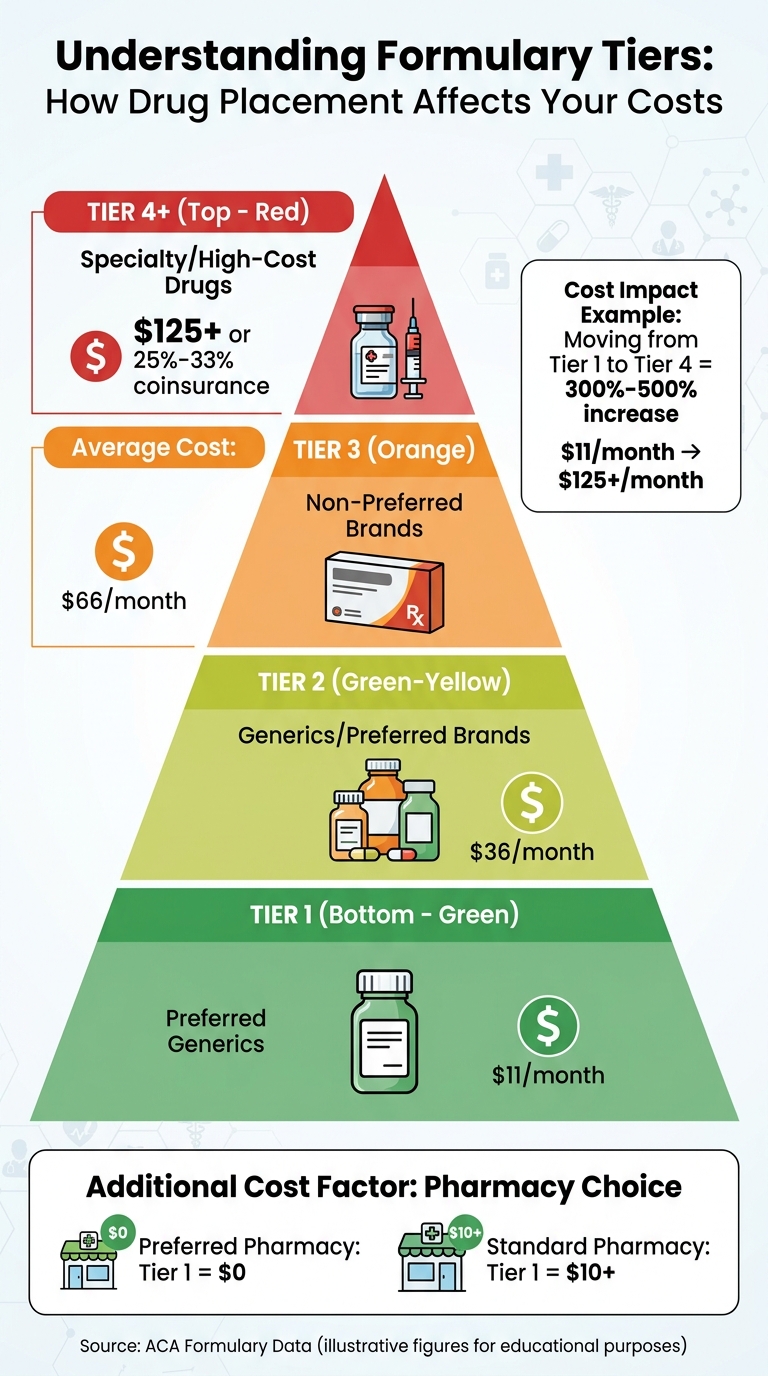
ACA Drug Formulary Tiers and Cost Comparison Chart
A formulary is essentially the list of prescription medications that your ACA health plan covers. If a drug isn’t included on this list, you’ll likely have to pay the full retail price out of pocket. These lists are created by P&T committees, which are made up of physicians and pharmacists who evaluate drugs based on their safety, clinical effectiveness, and cost.
"A formulary is more than just a static list: it is an entire system established to optimize patient care through safe, appropriate, effective, and economic use of drugs." – ASHP/AMA Standards
Formularies are designed to help control costs by steering patients toward lower-cost options like generics, biosimilars, or medications that come with manufacturer rebates. To further manage expenses, insurers use tools like prior authorization, step therapy, and quantity limits to regulate access to more expensive drugs.
Under ACA guidelines, health plans are required to include at least two medications in every major treatment category (such as antidepressants or blood pressure drugs). However, insurers have a lot of leeway in deciding which specific drugs to cover and how to assign them to tiers. This means the same medication might cost $15 per month on one plan but $75 on another.
Formulary Tiers and Their Cost Impact
Most ACA health plans organize drugs into tiers, ranging from Tier 1 (the least expensive) to Tier 4 or 5 (the most expensive). The lower the tier, the less you’ll pay out of pocket.
| Tier Level | Typical Drug Types | Average Out-of-Pocket Cost |
|---|---|---|
| Tier 1 | Preferred Generics | $11 |
| Tier 2 | Generics/Preferred Brands | $36 |
| Tier 3 | Non-Preferred Brands | $66 |
| Tier 4+ | Specialty/High-Cost Drugs | $125 or 25%–33% coinsurance |
If a medication is moved from Tier 1 to Tier 4, your costs could increase by 300% to 500%. For example, a generic drug that costs $11 per month in Tier 1 could jump to $125 or more in Tier 4. Specialty drugs in the higher tiers often require coinsurance instead of a flat copay, which can push monthly costs into the thousands.
Even the pharmacy you choose can affect your costs. A Tier 1 generic might be free at a preferred pharmacy but could cost $10 or more at a standard in-network pharmacy.
How ACA Marketplace Plans Structure Formularies
ACA plans are required to cover Essential Health Benefits, which include prescription drugs. However, insurers have significant flexibility in deciding which specific drugs to include and how to assign them to tiers. For example, plans must cover at least one drug in every United States Pharmacopeia (USP) category and class or match the number of drugs in each category as outlined by the state’s benchmark plan.
Pharmacy Benefit Managers (PBMs) often play a role in these decisions. PBMs negotiate rebates with drug manufacturers, which can influence which medications are placed on preferred tiers. In February 2026, the FTC reached a settlement with Express Scripts to stop favoring high-list-price drugs over cheaper alternatives solely to increase rebate profits.
Formularies aren’t static; they can change throughout the year. In 2023, 43% of formulary changes happened without directly notifying patients. This means a drug covered in January could become unaffordable or unavailable by mid-year, leaving patients to navigate appeals or seek alternative treatments. Understanding how formularies work is crucial to managing these challenges effectively.
Common Problems with ACA Plan Formularies
Medications Not Covered or Placed in High-Cost Tiers
One major issue people face is discovering that a much-needed medication isn’t covered at all or has been moved to a costlier tier. This shift can drastically increase monthly expenses, with some specialty drugs requiring coinsurance of 25% to 33%, pushing costs beyond $1,000 per month.
Even when a medication is technically covered, insurers often add restrictions that complicate access. For example, about 82% of doctors report experiencing treatment delays due to prior authorization requirements. In a 2022 case, formulary restrictions on cancer drugs caused an 11-day treatment delay, allowing a tumor to grow during that time. These aren’t just logistical headaches – they can have serious health consequences. The situation becomes even more challenging when mid-year changes and administrative barriers come into play.
Mid-Year Formulary Changes and Poor Information Access
Formularies are not static. Insurers can make changes throughout the year, such as moving drugs to higher-cost tiers, adding new restrictions, or even removing coverage entirely. Often, these adjustments happen without notifying patients directly. This means you might discover at the pharmacy counter that your medication now requires prior authorization or is no longer covered.
"Formulary stability is extremely important so that enrollees maintain access to the benefit they chose during enrollment as represented to them by the plan." – CMS
Finding accurate information during enrollment is another challenge. Formularies are constantly updated, and the tools insurers provide aren’t always reliable or easy to use. By the time you confirm that your medication is covered, the plan year may have already started, locking you into a plan until the next Open Enrollment period. Beyond these coverage shifts, procedural barriers like prior authorization can further delay access to essential medications.
Prior Authorization and Step Therapy Requirements
Adding to the frustration of cost and coverage changes are the delays caused by prior authorization and step therapy protocols. Prior authorization requires your doctor to prove that a medication is medically necessary before the insurer will cover it. This process can leave patients waiting up to a week – or longer – without their medication.
Step therapy creates another hurdle by requiring patients to try lower-cost alternatives before approving the prescribed drug. For example, a rheumatoid arthritis patient faced a 7-day delay in February 2026 when her insurer unexpectedly switched her medication, causing a skin breakout that required prior authorization to address. Similarly, asthma patients may need to try and fail on three different generic inhalers before their plan approves the brand-name one their doctor initially prescribed.
| Restriction Type | What It Means | Impact on You |
|---|---|---|
| Prior Authorization | Requires doctor approval before dispensing | 82% of doctors report treatment delays |
| Step Therapy | Must try and "fail" on cheaper drugs first | Delays access to effective treatment; may cause flare-ups |
| Quantity Limits | Caps on doses covered per month | You may need to pay full price for doses beyond the limit |
While 73.2% of formulary exception requests are approved overall, expedited reviews have a much lower success rate – only 38.5%. This means even patients with urgent medical needs often face significant delays and obstacles.
How to Review and Navigate ACA Plan Formularies
Once you’re aware of the common challenges with formularies, it’s time to take action to ensure your medications stay covered. Before enrolling in an ACA plan, confirm that your prescriptions are included. If you’re in Illinois, you’ll now use Get Covered Illinois instead of HealthCare.gov to shop for plans. This platform includes a prescription look-up tool to check if your medication is on a plan’s formulary and what it will cost you.
Checking Plan Formularies Before You Enroll
Most insurers provide Medication Search tools on their websites that are updated in real time, making them more reliable than static PDF lists, which may not reflect the latest changes. When downloading a formulary document, always check the effective date to ensure it’s current – an outdated list from 2025 won’t help you plan for 2026. You can also access detailed drug lists through your Summary of Benefits and Coverage (SBC), either via your Marketplace account or directly from the insurer.
Pay special attention to the restriction codes listed next to your medications. These codes provide insight into potential hurdles you might face:
- PA: Prior Authorization, meaning you’ll need approval before the medication is covered.
- ST: Step Therapy, which requires trying lower-cost alternatives first.
- QL: Quantity Limits, indicating restrictions on how much medication you can receive.
Once you’ve verified your medications are covered, compare plans based on overall drug costs – not just premiums.
Comparing Plans Based on Drug Costs and Coverage
A plan’s premium doesn’t tell the whole story. To evaluate cost-effectiveness, calculate the Total Annual Cost by adding the yearly premium, deductible, and estimated copays for your medications. For example, a plan with a $200 monthly premium but low drug copays might save you more than one with a $150 premium that places your prescriptions in higher-cost tiers.
Tier placement has a major impact on your out-of-pocket costs. Here’s a breakdown:
- Tier 1 (generics): Usually $0–$15 per fill.
- Tier 5 (specialty drugs): Often requires 25%–33% coinsurance, which can exceed $950 per month.
Also, check if your pharmacy is listed as "preferred" or "standard" within the plan’s network. A Tier 1 generic could cost $0 at a preferred pharmacy but $10 or more at a standard one.
For those who qualify, Cost-Sharing Reductions (CSR) can make a big difference. These subsidies – available only with Silver-level plans – can lower your deductibles and copays significantly. Be sure to factor this in when comparing options.
If you discover coverage gaps during your comparisons, there are steps you can take to request exceptions or file appeals.
Requesting Formulary Exceptions and Filing Appeals
If your medication isn’t covered or is placed in a high-cost tier, you can request a formulary exception. This process requires your doctor to confirm that all covered alternatives have either been ineffective or caused negative side effects. Some plans may allow a one-time refill while your exception request is under review.
To get started, contact your insurer using the number on your member ID card and request the drug exceptions form. If waiting 72 hours could harm your health, ask for an expedited review, which guarantees a response within 24 hours. Standard requests are typically processed within 72 hours.
"Generally, if the exception is granted, your health plan will cover the drug, but you can be charged the cost-sharing amount associated with the highest (most expensive) tier of your drug plan." – KFF
If your exception is denied, you can escalate the issue by filing an internal appeal. You also have the right to request an independent third-party review. In Illinois, free assistance with appeals and other coverage issues is available through the State Health Insurance Assistance Program (SHIP) and Get Covered Illinois.
How Illinois Health Agents Can Help

Illinois Health Agents offers personalized, one-on-one support to help you find ACA plans that cover your medications at an affordable cost – and they do this at no charge to you. Their tailored approach simplifies the often overwhelming process of selecting the right health plan.
To get started, you’ll need to provide a complete list of your medications, including dosages and how often you take them. Using this information, the agent conducts a formulary analysis across available plans. This analysis identifies which tier each medication falls under and flags any restrictions, like Prior Authorization, Step Therapy, or Quantity Limits. This step is essential because picking the wrong plan could cost you anywhere from $500 to $2,000 or more each year in avoidable expenses.
Beyond analyzing formularies, the agents calculate your total annual costs by factoring in premiums, deductibles, and estimated copays. They also confirm whether your preferred pharmacy is classified as "preferred" or "standard" within a plan’s network. Using a preferred pharmacy can often help lower your costs. For those using maintenance medications, agents can assist in exploring 90-day mail-order options, which typically save 10–20% compared to monthly retail purchases.
"As a licensed Medicare agent, I’m here to help you find a plan that fits your needs and your budget – without the stress or confusion." – Antonia Nevarez, Licensed Illinois Medicare Agent
Illinois Health Agents partners with all major A-rated carriers in the state, including BlueCross BlueShield of Illinois, Aetna, Cigna, Humana, Molina, and UnitedHealthcare. They assist with both on-exchange plans available through Get Covered Illinois and off-exchange options, which may provide broader networks or enhanced benefits. During the annual enrollment period, agents review any changes in formularies or networks to ensure your plan continues to meet your needs.
Conclusion
Formularies are more than just lists of medications – they’re systems designed to manage costs. Knowing how they function can help you save money. Factors like medication tier placements, prior authorization, and step therapy rules all play a role in determining both your out-of-pocket expenses and how quickly you can access your prescriptions.
Focusing only on a plan’s monthly premium can lead to unexpected expenses. Instead, calculate your total annual cost by factoring in premiums, deductibles, and copays. Tools like the prescription look-up feature on Get Covered Illinois or your state marketplace can help you check where your medications fall within the tiers and uncover any utilization management requirements before you commit to a plan. This approach can help you avoid surprises down the road.
As mentioned earlier, reviewing your coverage during Open Enrollment (November 1 – December 15/31) is crucial. Medications that were affordable last year might shift to higher tiers, like moving from Tier 1 to Tier 4, which could dramatically increase your expenses. Changes in pharmacy networks can also affect how much you pay at the counter.
If sorting through plans feels overwhelming, consider reaching out for professional assistance. Licensed agents, such as those from Illinois Health Agents, can review your formulary, calculate your total annual costs, and flag any restrictions that might slow down access to your medications. These agents work with top-rated insurance providers and are available year-round to help with your questions and coverage needs.
Taking the time to understand formularies and carefully evaluate your options ensures you can access the medications you need without breaking the bank.
FAQs
How can I tell if a plan will cover my exact medication and dosage?
To find out if your medication and its dosage are covered, start by reviewing the plan’s formulary. This is a list of medications the plan covers, along with their tiers, which determine how much you’ll pay. Here’s how you can access this information:
- Check the insurer’s website for the formulary.
- Look at the Summary of Benefits provided by the plan.
- Contact your insurer directly for clarification.
If your medication isn’t included in the formulary, you might still have options. You can request an exception if your doctor confirms it’s medically necessary. Always verify these details directly with your insurer to avoid surprises.
What should I do if my drug gets moved to a higher tier mid-year?
If your medication gets shifted to a higher tier during the year, take a close look at your plan’s formulary and talk to your healthcare provider. They can guide you in considering alternatives, like switching to a medication in a lower tier. Also, reach out to your insurance provider to get clarity on the changes and discuss ways to handle the increased costs or explore other treatment options that are covered.
How do I estimate my true yearly drug costs before enrolling?
To figure out your yearly drug costs under an ACA plan, start by checking the plan’s formulary to ensure your medications are included and identify their tier levels. These tiers determine how much you’ll pay in copays or coinsurance. You can use prescription lookup tools available on HealthCare.gov or your state’s marketplace to assist with this process. Typically, lower-tier drugs, such as generics, come with smaller costs, whereas higher-tier medications tend to be pricier. By reviewing these factors, you can estimate your annual out-of-pocket expenses for prescriptions.
Recent Comments