

Shopping for family health insurance in Illinois looks different in 2026. Get Covered Illinois is now the state’s own marketplace, Aetna CVS Health has left, and the extra federal tax credits of the last few years ended with 2025. Here’s a quick look at the main family options on Get Covered Illinois this year:
- Blue Cross Blue Shield (BCBSIL): The only marketplace insurer that covers all 102 Illinois counties in 2026, and the only one offering PPO and POS plans along with HMOs. Four plan families: Blue Precision HMO, BlueCare Direct with Advocate, Blue Choice Preferred PPO, and MyBlue Plus.
- Ambetter: HMO plans in 25 counties, with 24/7 virtual care and the My Health Pays rewards program (up to $500 in 2026). A common pick for budget-minded families in its service area.
- Molina Healthcare: HMO plans with around-the-clock virtual care and a nurse advice line. Note that Molina plans leave Get Covered Illinois on January 1, 2027.
- Aetna CVS Health: No longer sells Illinois marketplace plans. Former members can compare Oscar, UnitedHealthcare, Cigna (2026 only), MercyCare, and the carriers above, depending on their county.
Quick Comparison
| Provider | 2026 Plan Types | Key Features | Best For |
|---|---|---|---|
| Blue Cross Blue Shield | HMO, POS, PPO | Statewide coverage, only PPO option on the marketplace | Families needing flexibility or living outside major metro areas |
| Ambetter | HMO | Virtual care, My Health Pays rewards | Budget-minded families in its 25-county area |
| Molina Healthcare | HMO | Teladoc virtual care, nurse line, Healthy Rewards | Families who are fine switching plans for 2027 |
| Aetna CVS Health | Not offered in 2026 | Left the Illinois marketplace after 2025 | Former members should compare other carriers |
To choose the best plan, start with your family’s healthcare needs, your budget, and the doctors you want to keep. Prices vary a lot by county. The Illinois Department of Insurance reports that the second-lowest-cost Silver plan rose 34% on average for 2026, before tax credits. As one example, the lowest-cost Silver plan in Cook County for a 21-year-old non-smoker is $388.75 a month before tax credits. Family premiums depend on each person’s age and where you live, so get a quote for your own household.
Ambetter Health Insurance Review | Pros and Cons (Video)
1. Blue Cross Blue Shield Plans
Blue Cross Blue Shield of Illinois (BCBSIL) offers family coverage in every part of the state. According to the Illinois Department of Insurance, BCBSIL is the only marketplace insurer covering the entire state in 2026, and it is the only insurer available in 63 counties. If you live outside the Chicago and St. Louis areas, there’s a good chance BCBSIL is your main option.
For 2026, BCBSIL sells four plan families on Get Covered Illinois, each in Gold, Silver, and Bronze:
| Network Type | Plan Type | Metal Levels | Best For |
|---|---|---|---|
| Blue Choice Preferred PPO | PPO | Gold, Silver, Bronze | Families wanting broad provider access |
| Blue Precision HMO | HMO | Gold, Silver, Bronze | Families preferring coordinated care |
| BlueCare Direct with Advocate | HMO | Gold, Silver, Bronze | Families already using Advocate doctors and hospitals |
| MyBlue Plus | POS | Gold, Silver, Bronze | Families balancing cost and provider choice |
The Blue Choice Preferred PPO is the plan to look at if your family sees specialists often or wants some coverage outside the network. PPO plans generally don’t require referrals to see specialists, though they usually cost more each month than HMO plans.
The Blue Precision HMO focuses on lower costs and coordinated care. You pick a primary care doctor who guides your care and handles referrals, which works well for families with steady, predictable healthcare needs.
BlueCare Direct with Advocate is an HMO built around the Advocate Health Care system. It can be a good value if your family’s doctors and preferred hospital are already part of Advocate.
The MyBlue Plus plan is a POS (point of service) plan. POS plans sit between an HMO and a PPO, so you get some of the savings of an HMO with a bit more flexibility. Check that your doctors are in the network before you enroll.
BCBSIL also offers a catastrophic plan, Blue Choice Preferred Security PPO, for people who qualify. In 2026, BCBSIL is the only insurer on Get Covered Illinois offering PPO or POS plans. Every other carrier sells HMOs only. Next, we’ll look at Ambetter’s family coverage.
2. Ambetter Insurance Options
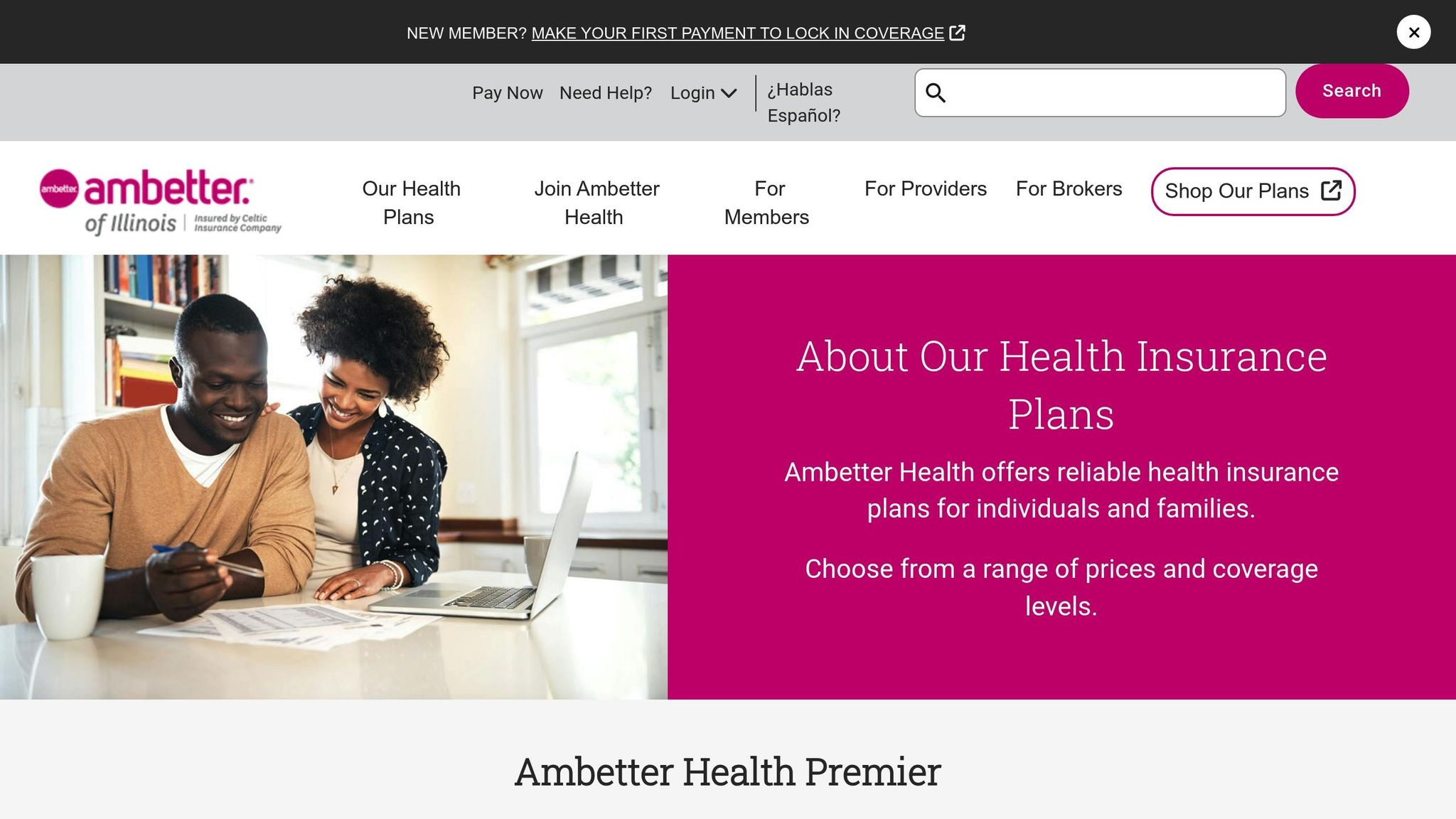
Ambetter of Illinois, insured by Celtic Insurance Company, offers marketplace plans in 25 Illinois counties for 2026. Its plans are HMOs and come in Bronze, Silver, and Gold. Here’s how the tiers generally compare for families:
| Plan Type | Monthly Premium | Out-of-Pocket Costs | Best For |
|---|---|---|---|
| Bronze | Lowest | Highest; now HSA-compatible | Young, healthy families needing basic coverage |
| Silver | Moderate | Moderate | Families balancing costs with regular healthcare |
| Silver with cost-sharing reductions | Moderate | Lower, based on income | Families with incomes up to 250% of the poverty level |
| Gold | Highest | Lowest | Families with frequent medical needs |
| All tiers | Varies by county and age | Capped at $21,200 for a family in 2026 | Compare your exact quote on Get Covered Illinois |
Ambetter added RUSH University System for Health to its Illinois network in December 2023, which gave Chicago-area members access to RUSH locations. Networks can change from year to year, so look up your family’s doctors in Ambetter’s provider search before you enroll.
Ambetter’s plans include some useful extras. Members get Virtual 24/7 Care for common problems like the flu, ear infections, and skin conditions. The My Health Pays rewards program lets members earn up to $500 in 2026 for healthy activities, and rewards can go toward premiums, copays, and deductibles (not pharmacy copays). Ambetter Perks also offers discounts on things like wellness activities and memberships.
Ambetter was the insurer behind the lowest-cost Silver plan in Cook County for 2026, according to the Illinois Department of Insurance. If your income changes during the year, update your Get Covered Illinois account so your tax credit stays accurate and you don’t owe money at tax time.
If you live in one of Ambetter’s counties, it’s worth putting its Silver plans side by side with BCBSIL, Oscar, and UnitedHealthcare before you decide.
sbb-itb-a729c26
3. Molina Healthcare Coverage
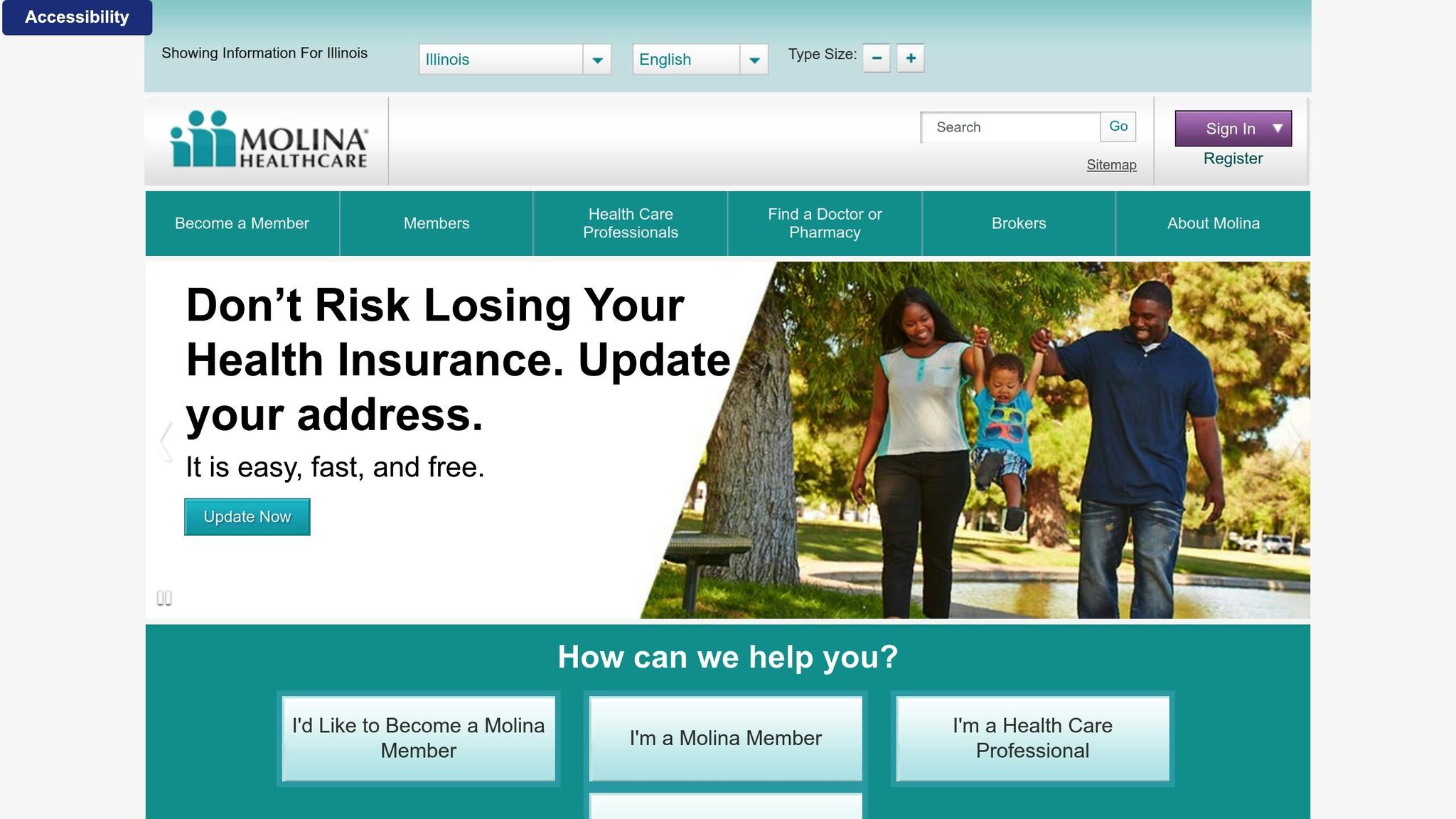
Molina Healthcare of Illinois sells HMO plans on Get Covered Illinois for 2026 in parts of the state. The big news for families: Molina is leaving the Illinois marketplace after this year.
Get Covered Illinois says Molina customers keep their coverage through December 31, 2026, but they’ll need to choose a new plan for 2027 during open enrollment.
| Coverage Component | Details | Family Benefits |
|---|---|---|
| Plan Type | HMO | Lower costs with a set provider network |
| Virtual Care | Teladoc, 24 hours a day, 365 days a year | Care for minor illnesses without leaving home |
| Support Services | Nurse Advice Line | Medical guidance when the doctor’s office is closed |
| Children’s Vision | Pediatric vision, including frames and lenses | Glasses for kids covered |
| Wellness Benefits | Molina Healthy Rewards | Rewards for staying on top of healthy habits |
Molina also offers free annual exams, in line with the ACA rule that marketplace plans cover preventive care at no cost when you use an in-network provider.
"…will no longer be available on the Get Covered Illinois marketplace."
– Get Covered Illinois, on Cigna and Molina plans starting January 1, 2027
The Healthy Rewards program and the Nurse Advice Line can help families keep up with checkups and avoid unnecessary trips to the emergency room. Just keep in mind that these benefits end when Molina’s 2026 coverage ends.
If you have Molina now, keep paying your premium so you stay covered through December. Get Covered Illinois plans to send affected customers a notice this fall with steps for picking a new 2027 plan.
4. What Happened to Aetna CVS Health Plans
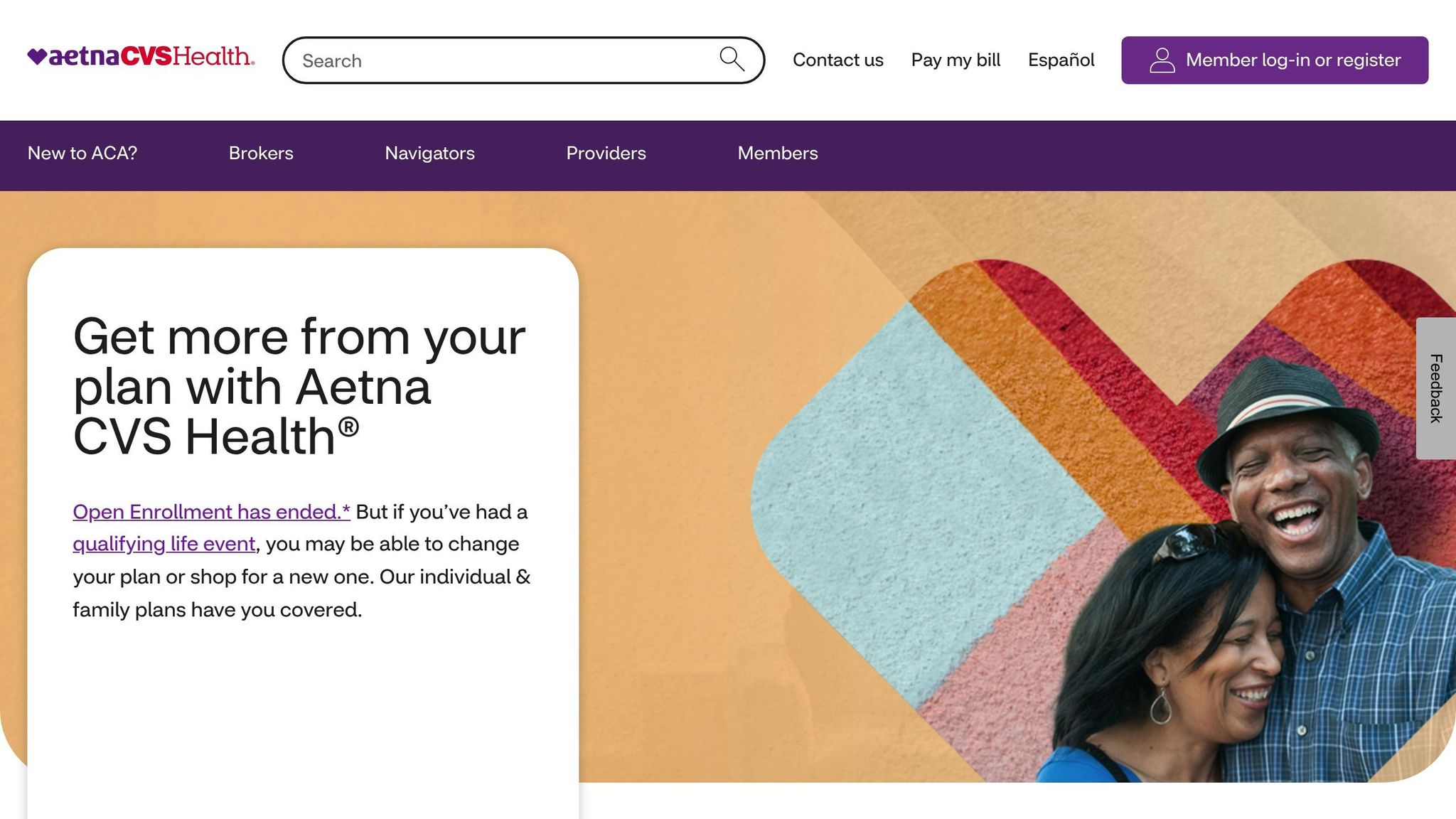
Aetna CVS Health stopped offering marketplace plans in Illinois at the end of 2025. Health Alliance and Quartz left too, so Illinois went from eleven marketplace insurers in 2025 to seven in 2026. Here’s who is still selling plans and what changed:
| Carrier | 2026 Plan Type | What Families Should Know |
|---|---|---|
| Oscar | HMO | Expanded for 2026 and now covers all of the Rating Area 3 counties, including Kane County |
| UnitedHealthcare | HMO | Added Effingham County and several central Illinois counties for 2026 |
| Cigna | HMO | Left Cook County for 2026 and leaves the individual market entirely on January 1, 2027 |
| MercyCare | HMO | Available in parts of northern Illinois |
| Aetna, Health Alliance, Quartz | None | No longer on the Illinois marketplace |
Every marketplace plan, whichever insurer you choose, covers maternity and newborn care, pediatric services, and preventive care.
If your family had Aetna in 2025, Get Covered Illinois automatically moved you into a similar plan for 2026 unless you picked one yourself. It’s worth checking that the plan you landed in still includes your doctors.
Looking ahead, Cigna and Molina are both leaving after 2026, so many Illinois families will have fewer insurers to choose from for 2027.
Carrier availability is set county by county, so the list above is a starting point. Your ZIP code decides which plans you can actually buy.
Plan Comparison: Benefits and Limitations
Evaluate how each plan fits your family’s healthcare needs and budget for 2026, and for 2027 open enrollment this fall.
Every insurer uses the same metal tiers to balance premiums against out-of-pocket costs. Families with fewer healthcare needs might lean toward Bronze plans, those seeking balanced coverage could consider Silver, and families with higher medical demands might find Gold plans more suitable. No insurer offers Platinum plans on the Illinois marketplace in 2026. Catastrophic plans are available to people under 30 and some others who qualify.
All plans include essential health services such as emergency care, hospitalization, outpatient visits, maternity and pediatric care, mental health services, lab tests, prescriptions, rehabilitative care, and preventive services. Out-of-pocket costs for in-network care are capped at $10,600 for one person or $21,200 for a family in 2026, rising to $12,000 and $24,000 in 2027.
To make an informed decision, compare plans and prices on Get Covered Illinois, which replaced HealthCare.gov for Illinois residents starting with 2026 coverage. Use factors like income, family size, and healthcare needs to find a plan that balances affordability with the coverage your family requires. This comparison can help you pinpoint the best option for your situation.
Choosing Your Family Health Plan
After reviewing plan comparisons, the next step is finding the right fit for your family. Take a close look at your family’s healthcare needs – whether that’s pediatric care for young kids or specialized care and prescriptions for ongoing conditions.
Key financial considerations:
- Premium tax credits still help, but they are smaller than before. The enhanced credits from 2021 through 2025 expired at the end of 2025. For 2026, households generally need an income between 100% and 400% of the federal poverty level to qualify. The House passed an extension in January 2026, but it has not become law, so check the latest on Get Covered Illinois before you enroll.
- Network coverage is crucial. BCBSIL is the only marketplace insurer in 63 Illinois counties, while Chicago-area families usually have several insurers to compare.
- Cost-sharing structure is also important. Bronze plans often have lower premiums but higher out-of-pocket costs, while Gold plans come with higher premiums but cover more expenses.
Here’s a simple way to compare plans:
| Factor | What to Consider | Why It Matters |
|---|---|---|
| Coverage Needs | Current conditions and future care needs | Helps determine the level of coverage required |
| Network Size | Available hospitals and providers nearby | Larger networks give you more flexibility |
| Total Costs | Premiums, deductibles, copays, and max out-of-pocket costs | Families with incomes up to 250% of the poverty level may qualify for extra cost-sharing reductions on Silver plans |
If your family has a Cigna or Molina plan, mark your calendar. Open enrollment on Get Covered Illinois starts November 1, 2026, and under new federal rules it must end no later than December 31, 2026, and choosing a new plan early in that window is the best way to avoid a gap in coverage on January 1, 2027.
For additional savings, pair a Bronze or catastrophic plan with a Health Savings Account (HSA). Starting in 2026, the IRS treats these plans as HSA-compatible (IRS Notice 2026-5), so you can set aside money and pay for eligible expenses with tax-free funds. By focusing on these factors, you can narrow down your choices and find the best plan for your family.
Trackbacks/Pingbacks